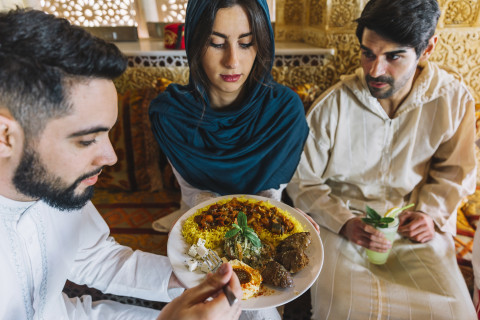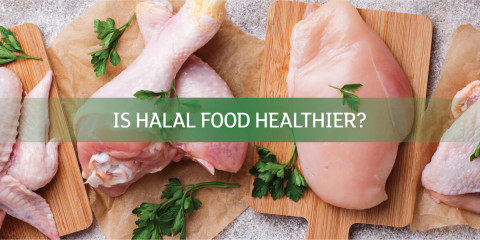


In a world driven by fast consumption, the concept of halal eating invites us to pause and reflect—not just on what we eat, but on how, why, and with what intention. For Muslims, eating halal is not merely a checklist of forbidden ingredients—it is a deeply spiritual and ethical practice that embodies faith, mindfulness, and compassion.
What Does “Halal” Really Mean?
The word halal in Arabic means “permissible” or “lawful.” In the context of food, it refers to items and practices that align with Islamic law (Shariah). While many are familiar with the prohibition of pork and alcohol, halal encompasses much more—it includes how food is sourced, handled, slaughtered, and even how it’s consumed.
Ethical Treatment of Animals
One of the most profound aspects of halal eating is the dignity and mercy extended to animals. The Prophet Muhammad ﷺ emphasized kindness to all living beings, and Islamic slaughtering practices reflect this.
-
The animal must be healthy at the time of slaughter.
-
It must be given water and not be slaughtered in the presence of other animals.
-
A swift, single cut severs the major arteries and minimizes suffering.
-
The name of God (Bismillah, Allahu Akbar) must be pronounced, acknowledging the sanctity of life.
This process is not just ritualistic—it is ethical. It recognizes the life of the animal as a trust, not a commodity.
The Source of Our Income Matters
Islamic ethics extend the halal principle to the source of wealth used to purchase food. If a person buys food with money earned through dishonest means (e.g., theft, fraud, or exploitation), that food—while perhaps halal in content—becomes haram (forbidden) due to the unethical earnings behind it.
This connection ties consumption to economic justice, ensuring that halal eating is not separated from how we earn and spend our resources.
Halal as a Spiritual Practice
Halal eating nurtures a conscious relationship with God. Every bite becomes an opportunity for remembrance (dhikr), gratitude (shukr), and discipline (taqwa). Muslims are encouraged to:
-
Eat in moderation.
-
Begin meals by invoking God’s name (Bismillah).
-
Share food with others, especially the needy.
-
Avoid wastefulness (israf).
Thus, food becomes a vehicle for spiritual elevation, not just physical nourishment.
Conclusion: A Path to Mindful Living
Halal eating is an invitation to intentional living. It’s about aligning your plate with your principles—showing care for animals, respect for divine laws, and gratitude for sustenance. In practicing halal, Muslims reaffirm that ethical eating is not just a dietary preference, but a form of worship and witness.
Let’s embrace halal not as a restriction, but as a pathway to purity, integrity, and spiritual mindfulness.